
THE REGION
Where Valleys Meet
There are places that reveal themselves immediately.
This is not one of them.
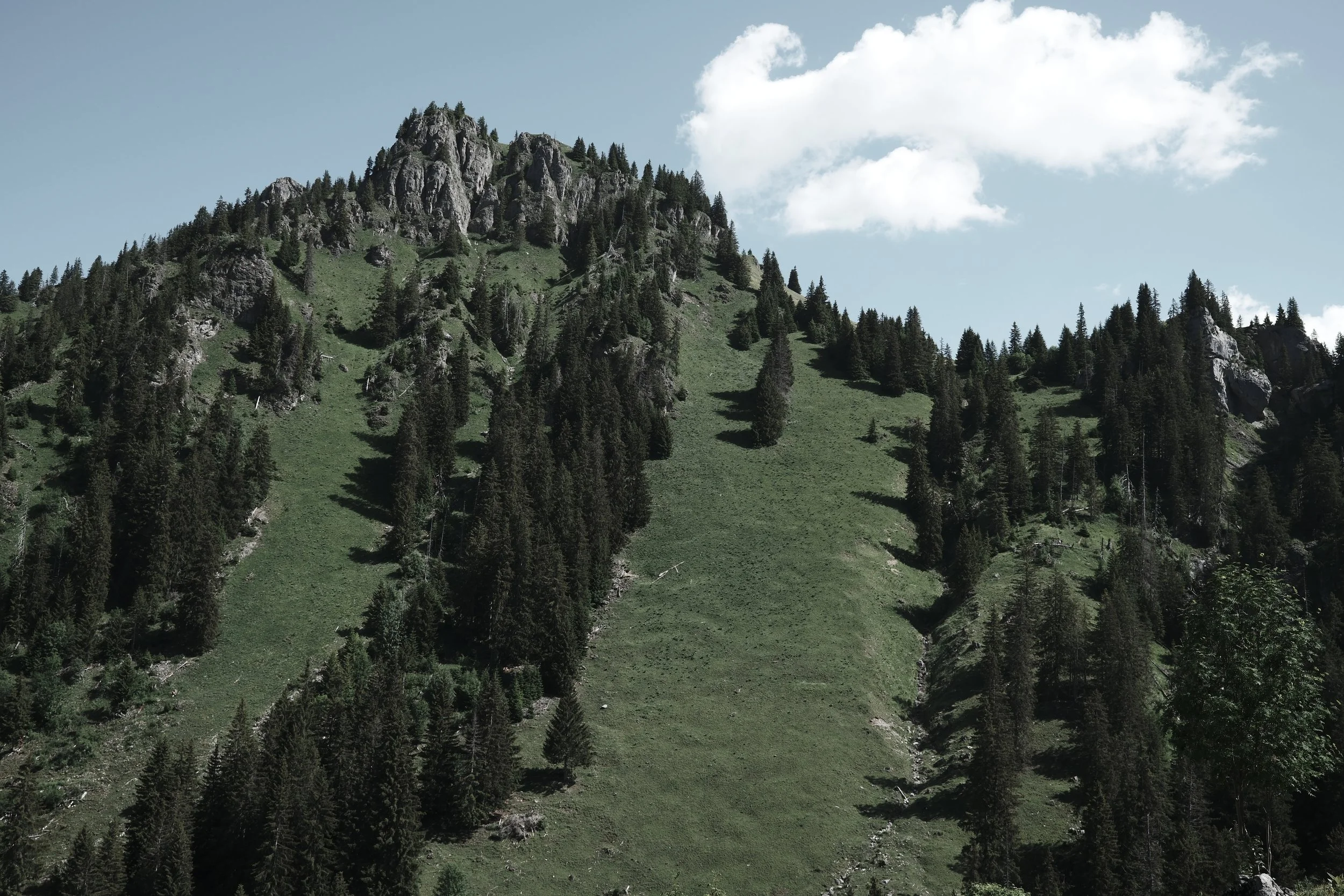
The landscape surrounding Haus Mannenberg asks something different. Stay a little longer. Watch where rivers meet, where one valley opens into another and where the railway quietly crosses from one language into the next. Notice how timber becomes masonry, how broad meadows give way to limestone walls, and how villages that appear similar slowly reveal entirely different histories.
Haus Mannenberg stands in Mannried, just beyond Zweisimmen, at the meeting point of the Simmental, the Saanenland and the French-speaking Pays-d’Enhaut.
It is a place defined less by a single destination than by the relationships between many
LAND AND WATER
A Landscape Shaped by Movement
Everything begins with water.
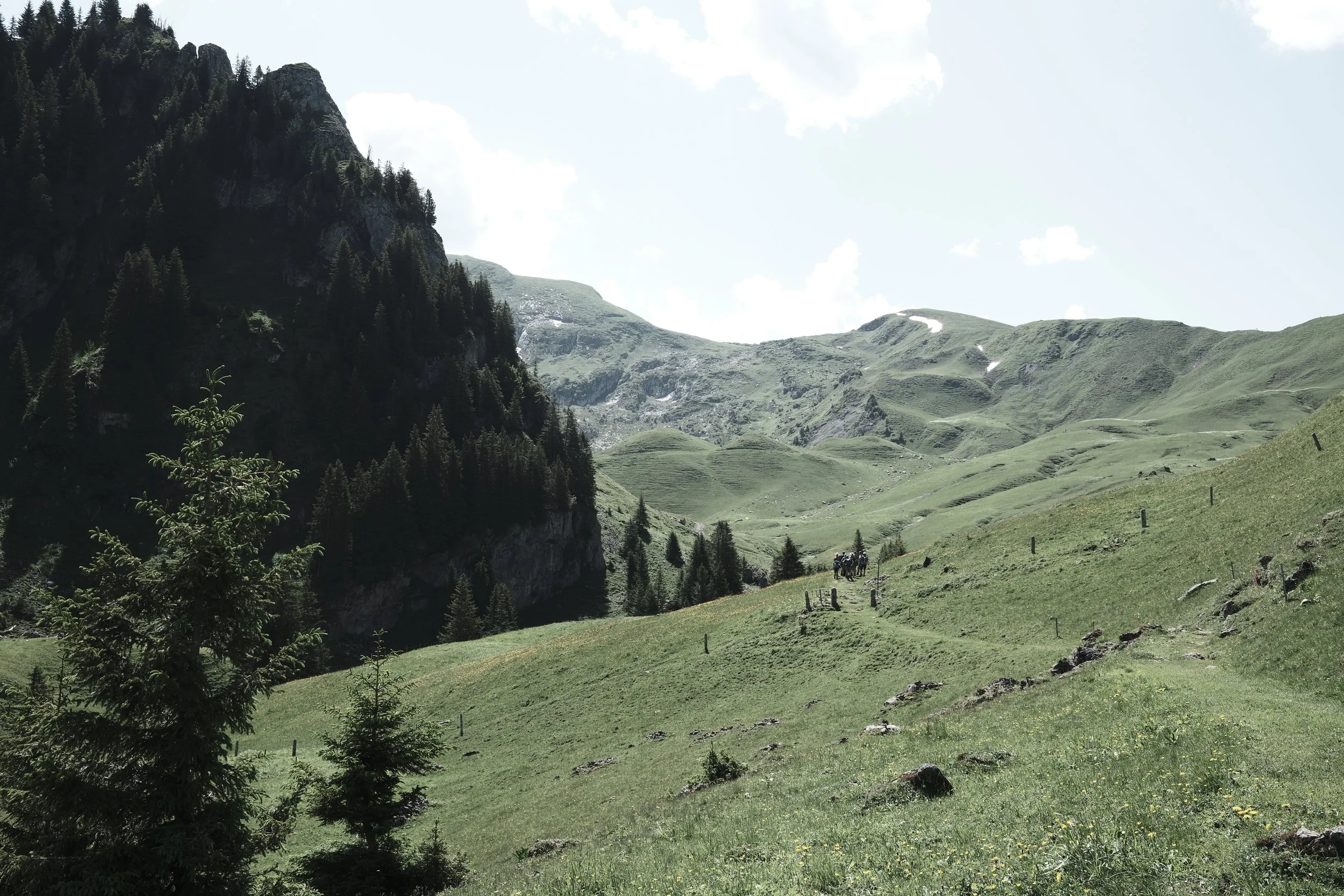
Near Zweisimmen, the Gross and Kleine Simme meet before continuing north through the valley. Long before roads, railways or tourism, these rivers shaped settlement, trade and movement, making this one of the natural meeting points of the western Bernese Alps.
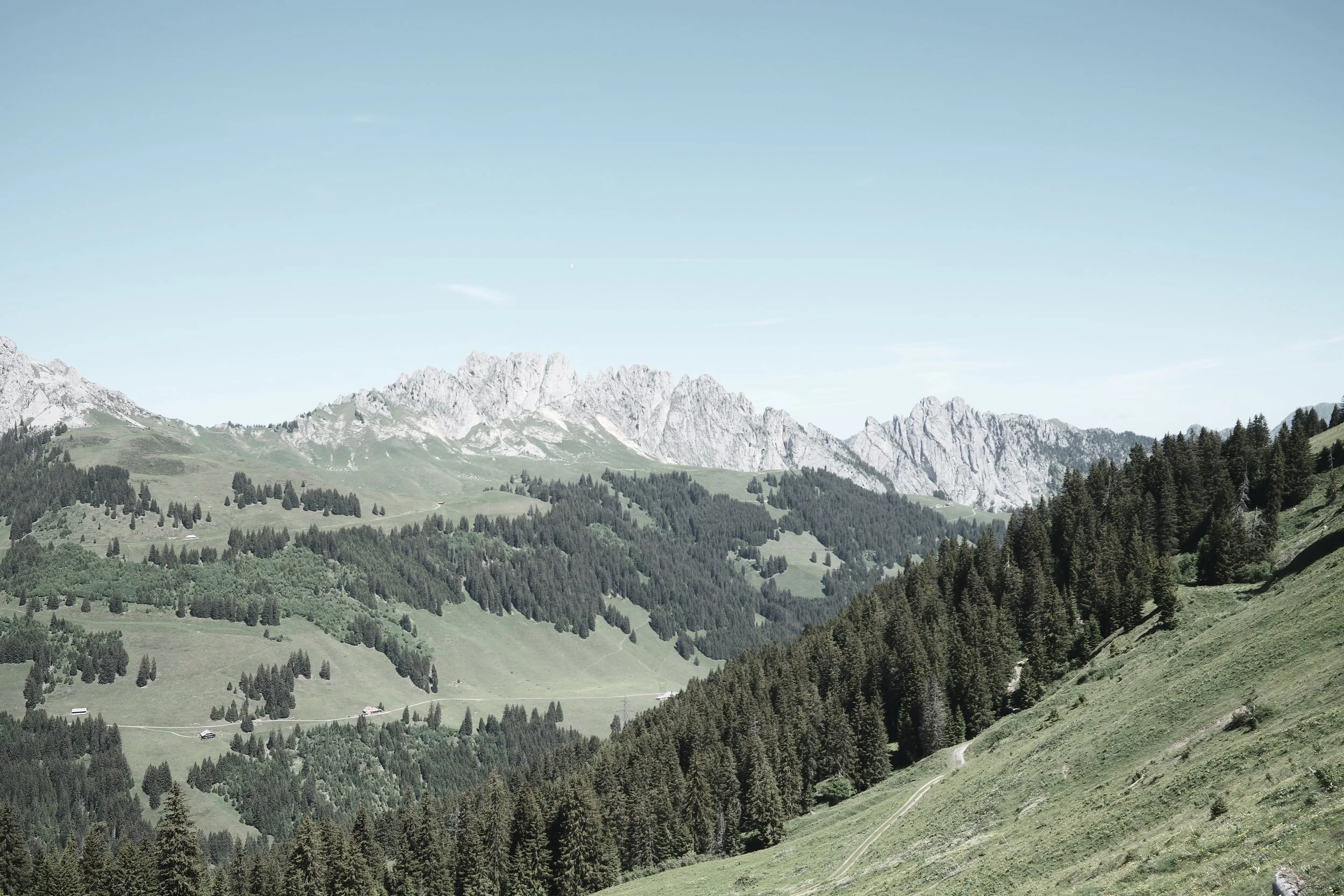
From here, the landscape changes with surprising speed. Rounded moorlands above Sparenmoos give way to productive valley floors, limestone escarpments and glaciated peaks. Within little more than half an hour, entirely different Alpine worlds unfold—not because they were planned to, but because geology, water and time have shaped them differently.
This is not one landscape.
It is several, quietly meeting.
THE WORKING LANDSCAPE
The View Is Made by Work
The openness of this landscape is often mistaken for nature alone.
It is, in reality, the result of centuries of careful work.
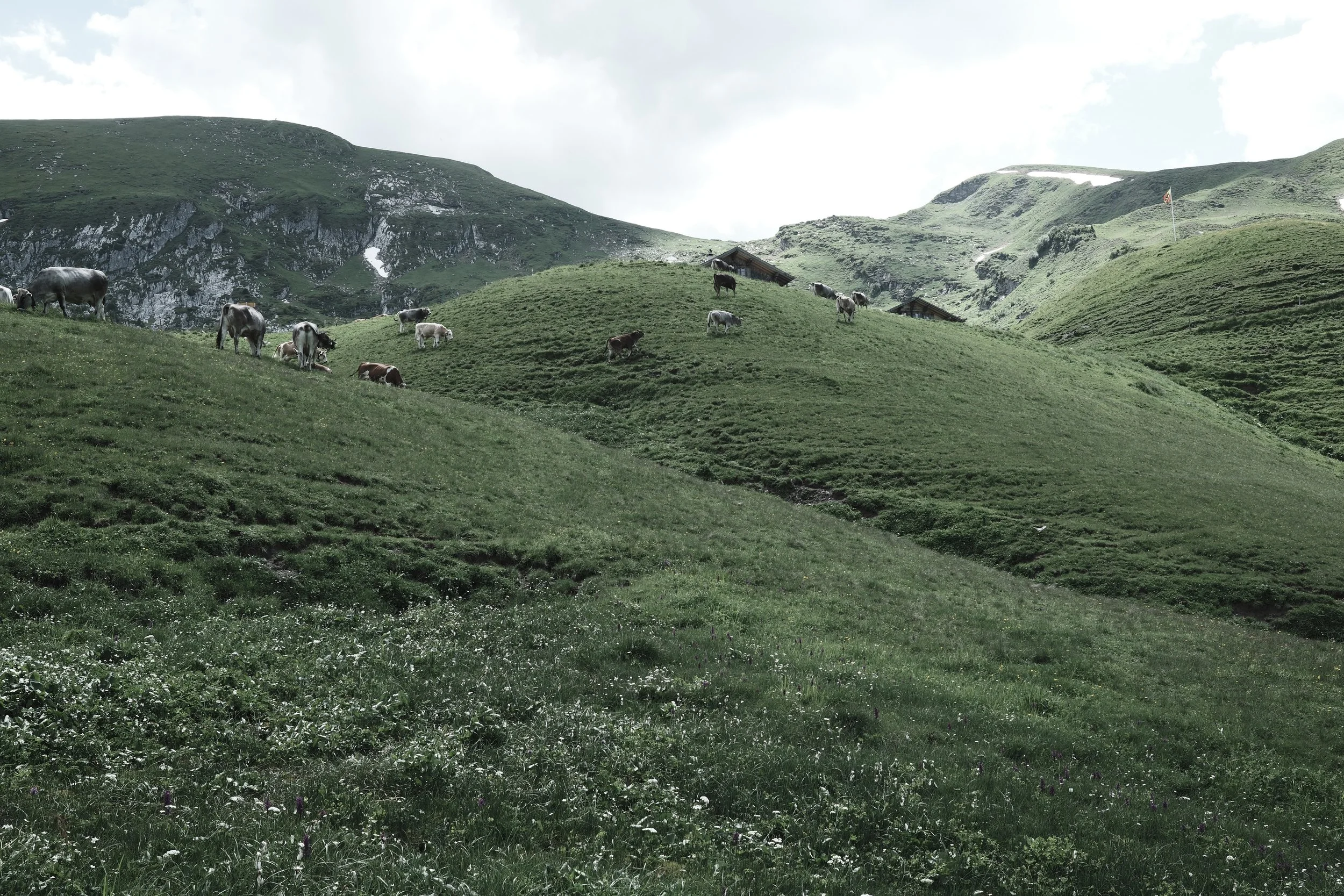
Generations of farmers learned where woodland should begin, when hay should be cut, how water should move through the fields and when livestock should leave the valley for higher pasture. Every meadow, fence, barn and forest edge records decisions made over generations rather than seasons.
Without that work, much of what defines this region would slowly disappear. Meadows would return to woodland. Traditional barns would lose their purpose. The delicate balance between settlement and landscape would begin to dissolve.
The beauty of the Bernese Oberland is not simply inherited.
It continues to be made.
HOUSES & LANDSCAPE
Built from Place
The historic houses of the Simmental and Saanenland were never designed to be admired.
They were designed to endure.
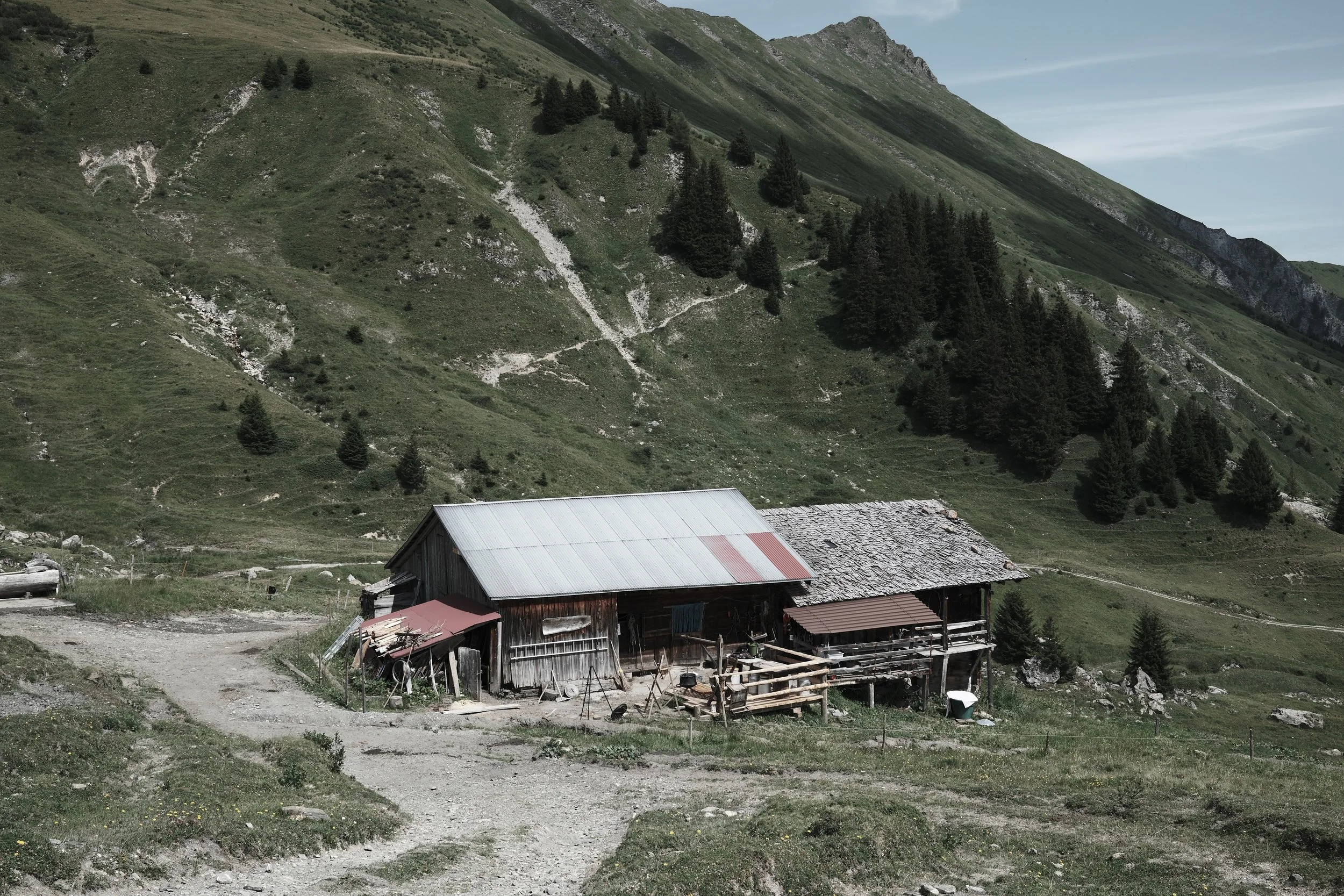
Stone anchored buildings to uneven ground. Timber responded to abundant forests. Deep roofs carried heavy snow. Living spaces, hay storage and livestock often occupied the same structure because Alpine life demanded practicality long before it demanded beauty.
Beauty followed naturally.
Carved façades, weathered timber and hand-cut inscriptions tell stories of craftsmanship, belief and family life, but they remain inseparable from the landscape that shaped them.
Haus Mannenberg belongs to this tradition. Not as a museum piece, but as a house that continues to live within the landscape that first gave it purpose.
DIFFERENT CENTRES
One Region, Many Characters
No two villages here tell the same story.
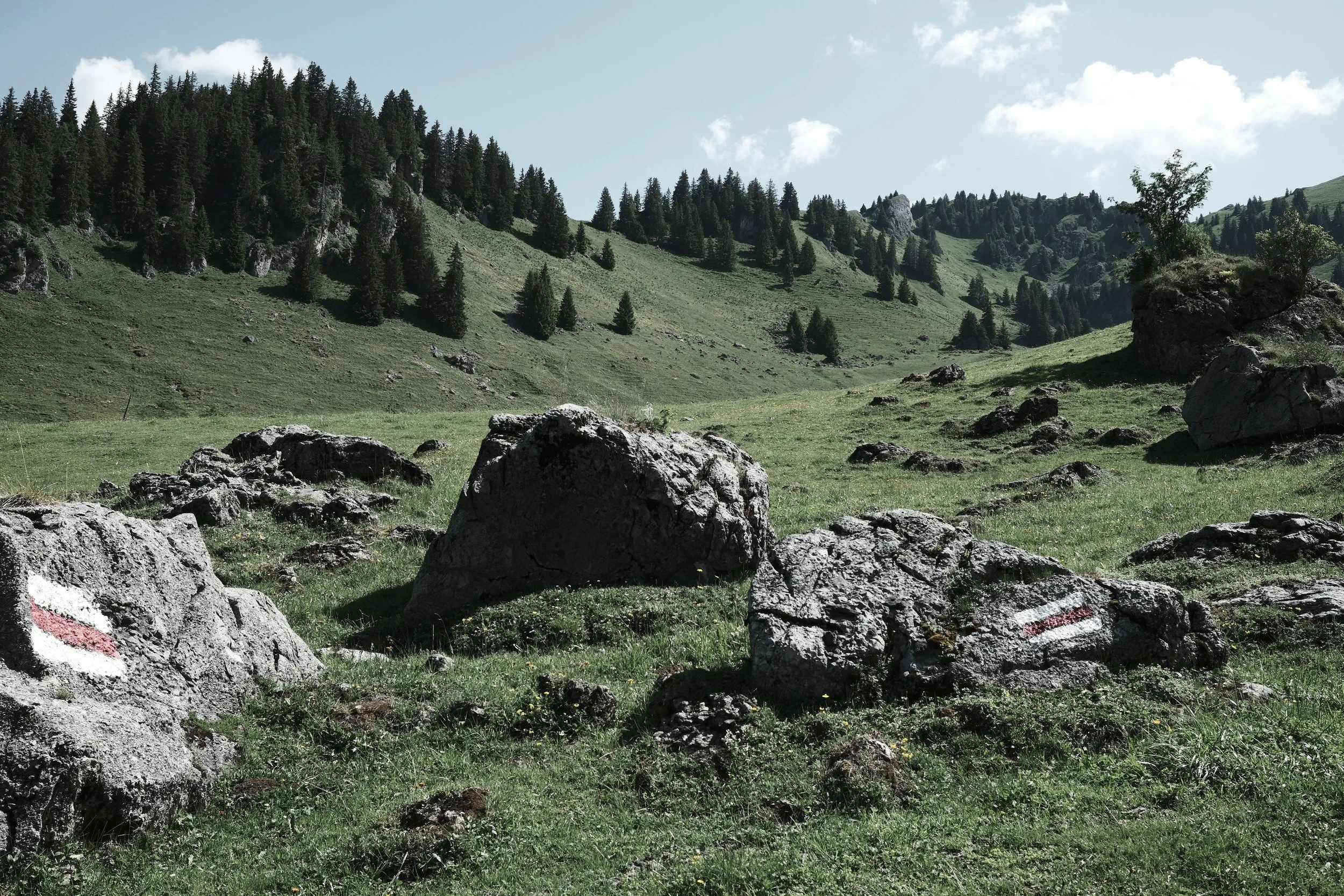
Mannried remains quietly rural, its relationship with fields and surrounding slopes still defining daily life.
Zweisimmen is a place of movement, where rivers, roads and railway lines converge, making it a natural centre long before modern tourism.
Saanen possesses the quiet confidence of an old regional capital, while Gstaad grew from a historic route village into one of Europe’s most recognised mountain destinations without ever becoming entirely separate from the valley that surrounds it.
Further west, Rougemont and Château-d’Œx introduce another architectural language and another cultural tradition, while Lenk, Lauenen, Jaun and the quieter side valleys reveal entirely different relationships between geography and settlement.
Together they create a region that rewards curiosity rather than speed.
LOOKING CLOSER
A Landscape That Reveals Itself
The Bernese Oberland rarely announces itself.
Its character is revealed gradually.
In the space of half an hour, the language changes. Rooflines become steeper or shallower. Church towers shift from Bernese restraint to Vaudois elegance. Wet pasture becomes limestone. A railway station becomes the centre of a village. A meadow begins to explain why the houses stand exactly where they do.
The railway quietly stitches these worlds together. Travelling from Montreux through the Pays-d’Enhaut and the Saanenland to Zweisimmen is less a journey between destinations than a lesson in how landscapes evolve.
The longer you stay, the more these relationships emerge.
Eventually, the region stops feeling like a collection of beautiful places and begins to read as one connected landscape.
That is when it becomes difficult to leave.
FROM MANNRIED
The Wider View
Many visitors first arrive knowing only one name: Gstaad.
They leave with a different understanding.
They begin to recognise the rhythm of working farms, the quiet authority of Saanen, the wetlands beyond Lauenen, the changing language west of Rougemont and the remarkable geography that connects them all.
Haus Mannenberg does not stand apart from this landscape.
It belongs to it.
And the longer you stay, the more the region reveals itself.
OUR FAVOURITES
The Region Through Our Eyes
The Region explains how this landscape fits together.
Our Favourites is where it becomes personal.
From independent makers and family-run farms to quiet walking routes, village cafés, architecture, bookshops, galleries and places we return to throughout the year, it is our own carefully curated guide to the people and places that make this corner of Switzerland so rewarding to explore.
Not an exhaustive directory.
Simply the places we believe are worth knowing.