The Colour of Wood
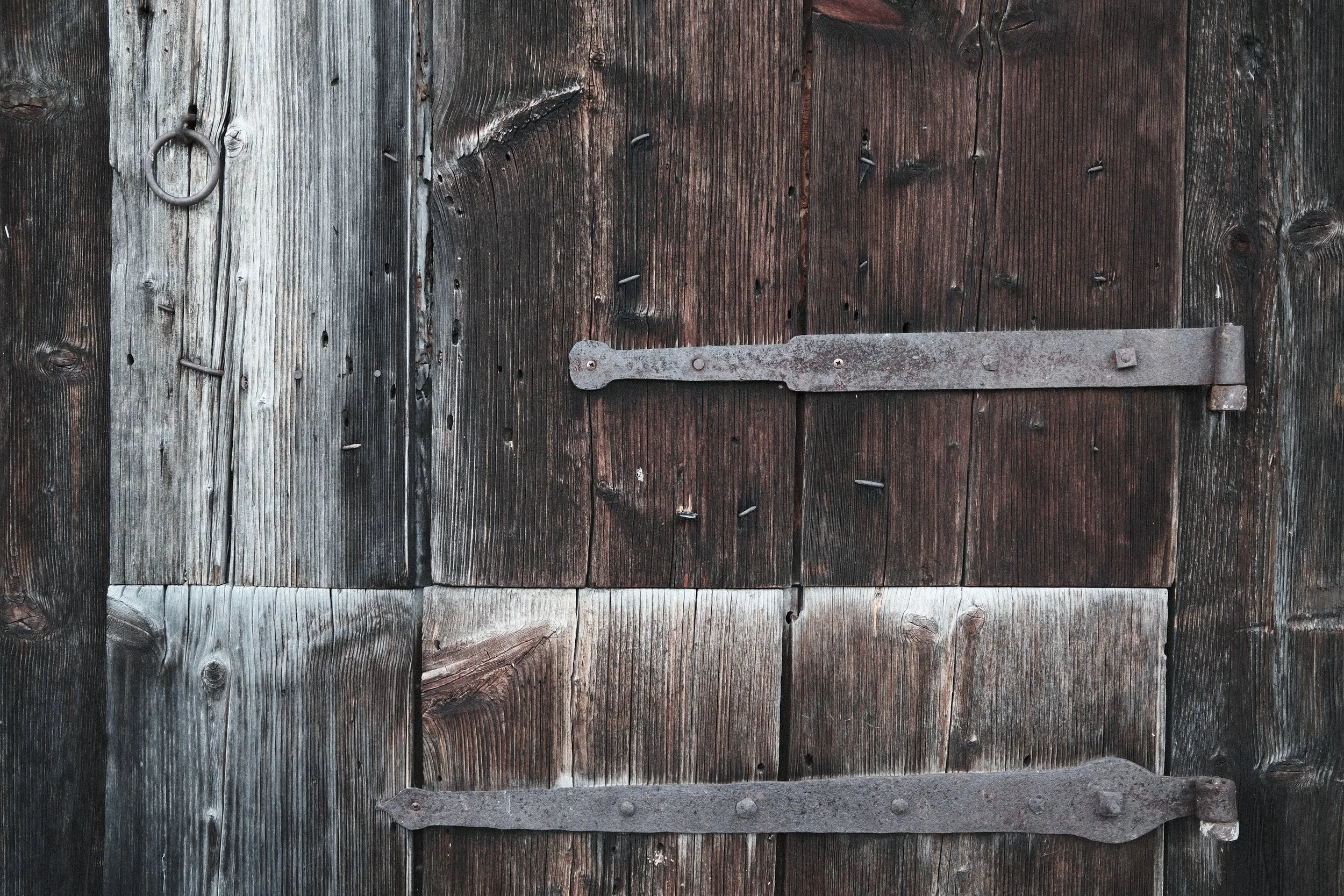
On timber, time and why the most beautiful materials are often the ones allowed to grow old.
Not all wood grows old in the same way.
Some boards turn silver after years beneath the sun. Others deepen into shades of amber, tobacco and walnut, carrying the marks of countless hands that have opened doors, climbed staircases or rested beside a window.
Walk through any old Alpine house and you begin to notice it.
The floors no longer reflect light evenly. Beams have darkened where smoke once gathered beneath the roof. Window frames are polished smooth by generations reaching for the same latch every morning.
None of it was designed.
Time simply left its mark.
A Material Made for the Mountains
For centuries, timber has defined the architecture of the Alps.
It was available close to home, comparatively easy to work with and remarkably resilient when understood properly. Houses, barns and outbuildings were constructed from the surrounding forests by craftspeople who knew how different woods behaved and where each belonged.
But building in timber also meant accepting that a house would never really be finished.
Wood moves.
It expands and contracts. It darkens. It dries. It bears scratches and dents. Exposed to weather, it slowly changes colour until two elevations of the same building can eventually appear to have been made from entirely different materials.
In the mountains, this was never considered a flaw.
It was simply what wood did.
What Time Leaves Behind
Every season adds something.
Dry mountain air. Long winters. Warm summers. Smoke from fires. Sunlight falling across the same wall year after year.
Slowly, almost imperceptibly, a house develops a character that could never have been specified on an architect’s drawing.
Haus Mannenberg has had more than three centuries for this to happen.
During its restoration, the temptation could easily have been to make everything uniform again: straighten what had moved, replace what was marked, sand old surfaces until they appeared new.
Instead, wherever possible, the opposite approach was taken.
Old timber was retained. Imperfections remained visible. New interventions were allowed to sit alongside older ones rather than pretending that the centuries between them had never happened.
The intention was never to return the house to a particular moment in its history.
It was to allow that history to remain legible.
The Beauty of Repair
There is an important difference between something being old and something being neglected.
The Alpine houses that survive are rarely those that were left untouched. They are the ones that were continuously cared for.
A roof was repaired. A board replaced. A window adjusted. A beam strengthened. Another generation made whatever intervention was necessary and life continued inside.
Perhaps this is why old buildings often feel so human.
Their beauty doesn’t come from perfection, but from accumulation.
One person built something. Another repaired it. Someone altered it decades later. Eventually the distinction between original and replacement becomes less important than the fact that the whole thing is still standing.
Preservation, in this sense, is not about freezing a house in time.
It is about allowing it to continue.
Letting Things Age
Modern materials often resist age. They are designed to remain unchanged for as long as possible.
Wood does the opposite.
It accepts time.
It records it.
A dining table acquires a mark. A floor becomes softer where people walk most often. Sunlight changes the colour of a wall. Something new slowly stops looking new.
There is a quiet honesty in that.
And perhaps that is why old timber feels so different. It carries evidence of the lives that have taken place around it without needing to explain any of them.
At Haus Mannenberg, we don’t expect the house to remain exactly as it is today.
Nor should it.
More breakfasts will be eaten around the table. More doors will be opened. Floors will be walked across, fires lit and summers spent with windows open to the garden.
The wood will continue to change.
And in another hundred years, if the house is fortunate enough to still be standing, someone may run their hand across one of those surfaces and wonder how it acquired its colour.
The answer will be the same as it has always been.
Time.